The stages that decide what it sounds like
Why there are two equalisers doing different jobs, and why the bass is always in mono.
The compressors decide how a master moves and the limiter decides what it costs. The five stages in between decide what it actually sounds like: a cleaning EQ, a tonal EQ, a de-esser, a multiband compressor, and a stereo width control.
These are the stages with no correct setting. They are also — and this is the interesting part — the only stages where a reference record can tell you the answer.
Two equalisers, doing opposite jobs
The chain has an EQ at stage ① and another at stage ③, and they are not the same tool used twice.
The cleaning EQ is subtractive and boring. It removes what should not be there: subsonic rumble below 30 Hz that no speaker reproduces but every compressor responds to, a resonant build-up at 200 Hz from a room that was never treated, a hiss shelf. Nothing here is a choice. If the mix is clean, this stage does nothing, and that is the correct outcome.
It sits before the glue compressor for the reason covered in the chain overview: a compressor reacts to energy it cannot hear, and low-frequency energy is where most of it lives.
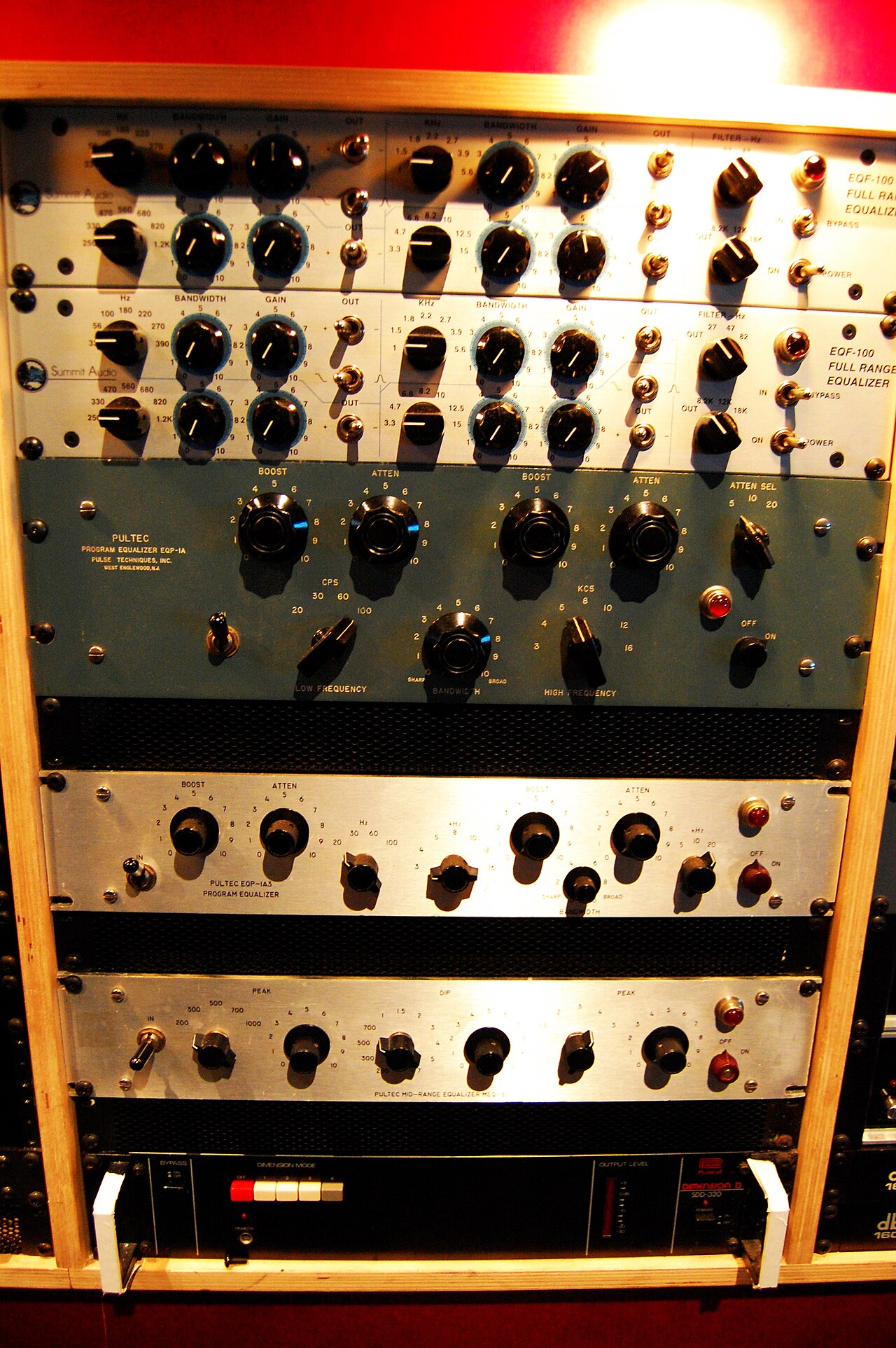
The tonal EQ is the character. This is where a master gets its balance — warmer, brighter, more open. Broad moves, usually shelves, rarely more than a few decibels.
And it is the one stage in the entire chain that this system computes rather than chooses. When a preset carries a measured reference, the tonal EQ is not a setting at all — it is the difference between your spectrum and the reference's, band by band:
tonal EQ = (reference profile − your profile) × strengthThat is the whole idea the product is built on, and it works here specifically because tonal balance is a destination. There is a spectrum the reference has, your mix has a different one, and the gap is arithmetic.
The de-esser: a compressor that only listens to one thing
Sibilance — the "s" and "t" sounds — concentrates energy around 6 to 9 kHz in short bursts. It survives mixing because it sounds fine in isolation, and then compression and saturation both push it forward until it is the loudest thing in the master.
A de-esser is a compressor whose detector only hears a narrow band. It listens around 8 kHz, and when energy there crosses the threshold, it reduces gain — but only by as much as range permits, so a de-esser cannot flatten a voice even if misconfigured. That limit is why it is a safe stage.
Its position in the chain is the interesting part. It comes before the multiband compressor because both react to treble, and the multiband is the blunter of the two: a single sibilant crossing the multiband's high-band threshold pulls that entire band down, so an "s" briefly ducks every cymbal in the arrangement. Catching it first with a narrow tool means the broad tool never sees it.
The multiband: the stage that argues with your EQ
A multiband compressor splits the signal into bands — here, below 200 Hz, 200 Hz to 5 kHz, and above — compresses each independently, and recombines them. It is the most powerful stage in the chain and the one most likely to produce a result nobody asked for.
The reason is the interaction with the tonal EQ, and it catches everyone:
You boost 3 dB at 60 Hz because the mix is thin. The multiband's low band now receives 3 dB more energy, crosses its threshold more often, and compresses harder — handing back much of what you added. But not evenly: only on the loud parts. Your master is now thin in the choruses and full in the verses, and the EQ curve on screen shows a boost that is only sometimes happening.
The general principle is worth carrying: a multiband compressor converts a static tonal decision into a dynamic one. Sometimes that is exactly what you want — a low end that stays controlled when the bass player digs in. Often it means your careful EQ move is being partially undone by a stage two positions downstream.
Stereo width, and why the bass is mono
The width control works on mid/side: it separates what the channels share from what makes them different, and changes the balance between them. More side, more width.
Two consequences that are not obvious.
Widening makes a master brighter. The difference between the two channels is mostly reverb, room tone and cymbals — high-frequency material. Push the width up and the treble comes with it, whether or not you touched an EQ. This is one of the most common causes of a master that got harsh for no traceable reason.
Below 120 Hz the image is collapsed to mono, always. The mono_low_hz setting is not a taste. Three separate reasons converge:
- ·Low-frequency stereo information is the most likely to cancel when a system sums to mono — a club PA, a phone speaker, a laptop — and cancellation in the bass takes the whole bottom of the record with it.
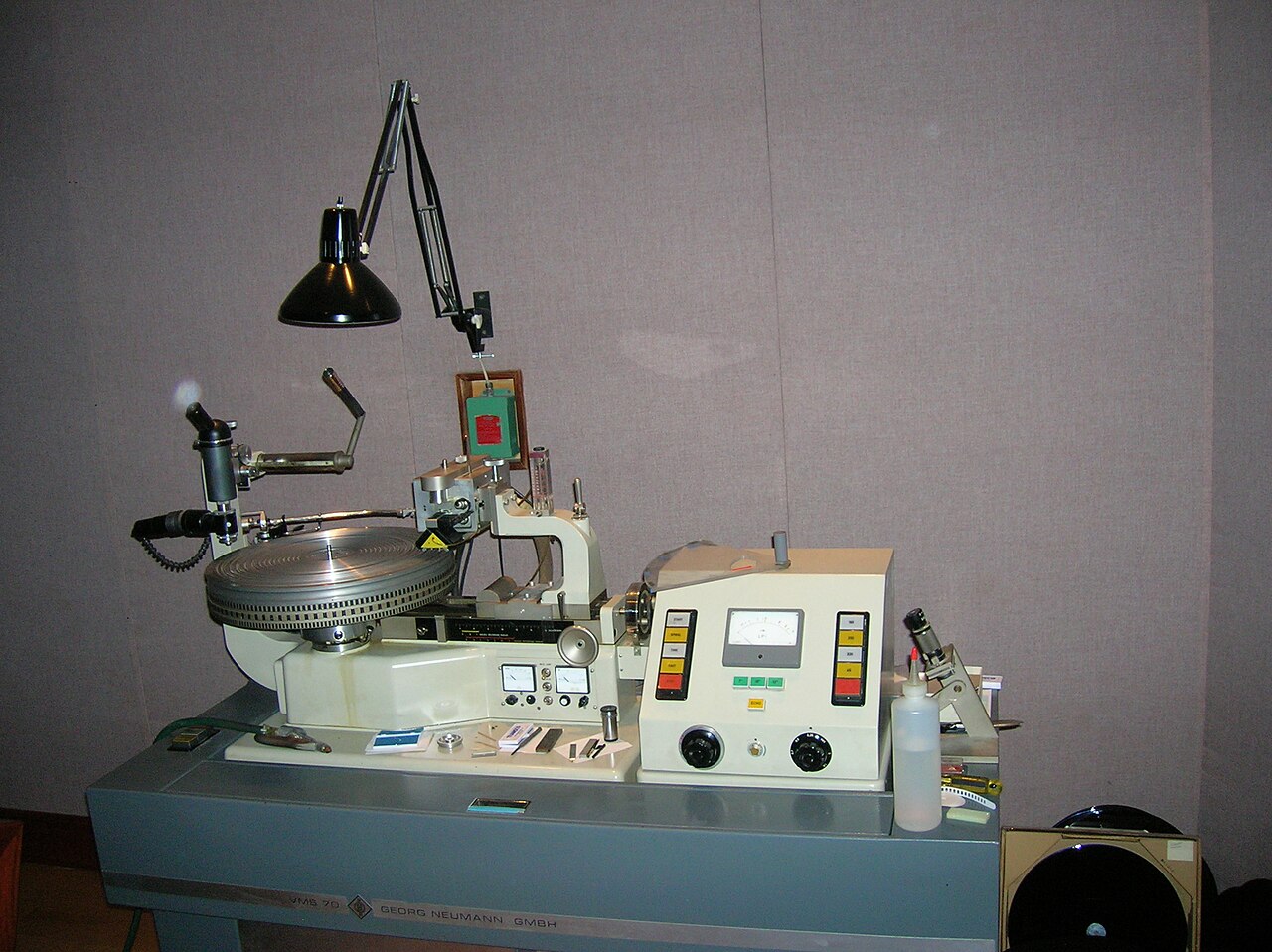
- ·A vinyl cutting lathe cannot cut wide low frequencies at all. Out-of-phase bass moves the cutter vertically and the stylus leaves the groove.
- ·Your ear cannot localise low frequencies anyway. Below roughly 100 Hz there is no directional information to hear, so stereo width down there is spending risk on something inaudible.
What can be copied, and what can't
The five stages here split cleanly along a line that runs through this whole project.
Tonal EQ and stereo width can be copied from a reference record. Both are measurable states rather than processes. Measure a reference's spectrum, measure yours, apply the difference — the arithmetic is honest, and if you land on the same spectrum you have genuinely landed in the same place. The same is true of the width ratio.
The de-esser, the multiband and the compressors cannot. You can measure that a reference has controlled sibilance, but not whether it got there by de-essing, by microphone choice, or by a singer who enunciates well. You can measure its dynamic range but not the route it took to get there — and, as the note on the two compressors argues, different routes to the same number sound nothing alike.
This is why, in this system, exactly two things get overwritten from measurement and everything else comes from a preset that a human chose. Not because the rest is unimportant. Because for the rest, the measurement does not contain the answer, and a number that looks like an answer is worse than no number at all.
Try it on your own mix
Wavely shows the whole chain — every stage, every parameter, and why each decision was made. Adjusting it and re-mastering is free on every plan.
Get started free →