Kind of Blue, 1959 — a room, three tracks, and almost no second takes
What you can hear when a recording captures a performance instead of assembling one.
Miles Davis booked Columbia's 30th Street Studio for two afternoons in 1959 — 2 March and 22 April. He arrived with sketches rather than scores: scales and modes, a few lines, an outline of what each piece was reaching for. The musicians had not rehearsed the material. Several pieces were captured on the first take.
The result outsold every other jazz record ever made, and it still gets used to demonstrate hi-fi systems sixty-five years later. Both facts have something to do with how it was recorded.
The room was the instrument
30th Street Studio was a deconsecrated Armenian church on East 30th Street in Manhattan, with a high ceiling, wooden interior and a natural decay that engineers spent decades trying to keep Columbia from selling.
That matters more than it sounds. In 1959 you could not manufacture a space afterwards. There was no plate reverb on every channel, no convolution, no option to record dry and decide later. The ambience you hear on Kind of Blue is the actual room, arriving at the microphones at the same instant as the instruments, with the musicians playing into it and adjusting to what they heard coming back.
This is why the record has depth that is hard to fake. The reverb is not an effect applied to a performance — it is part of the performance. When Paul Chambers' bass moves, the room moves with it, in the correct proportion, because physics did the mixing.
Three tracks, and what that forces
Fred Plaut engineered onto a three-track Ampex machine. Three.
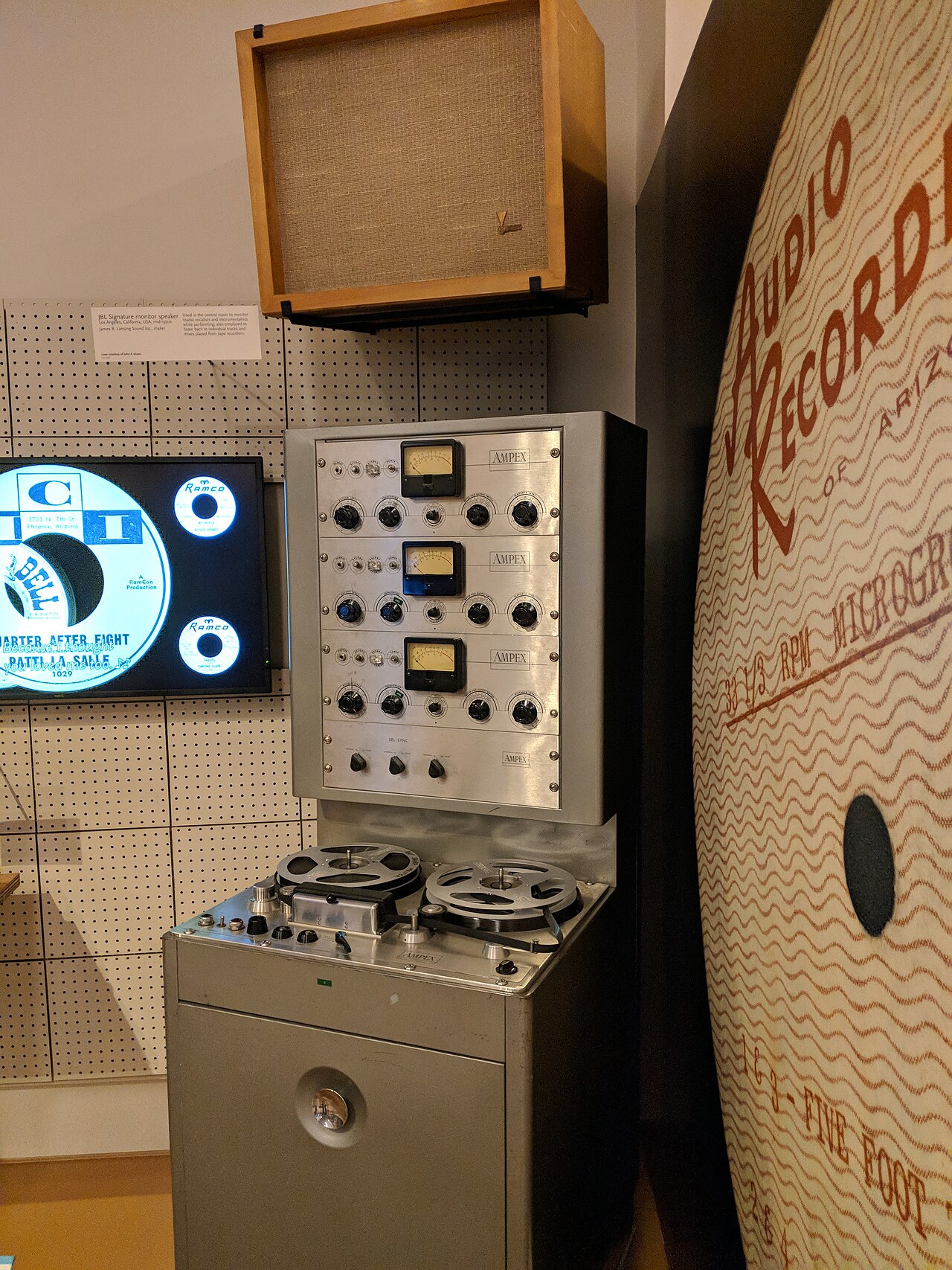
A modern session might run sixty tracks before anyone questions it. Three means almost every decision is made before the tape rolls: where the musicians stand relative to each other and to the microphones, how loud each of them plays, how the sextet balances itself in the room. Get it wrong and there is no fixing it later, because there is no "later" — the parts are already committed together.
What this produces is a recording where balance is a musical decision made by musicians, not a technical decision made afterwards by someone at a desk. When Coltrane steps forward on "So What", he steps forward physically. The dynamics are performance dynamics.
It also means the record has essentially no editing. What you hear is what happened in the room, in order, including the moments where the band is listening rather than playing.
The mistake nobody heard
Here is the part that ought to be embarrassing and is instead rather wonderful.
The tape machine used on the first session was running slightly slow. Recorded slow, a tape plays back fast — which meant three of the album's tracks, "So What", "Blue in Green" and "Freddie Freeloader", were released marginally sharp and marginally quick.
For over thirty years, that is the version everybody heard. It is the version that sold millions of copies, was analysed in conservatories, and became one of the most listened-to jazz records in existence. The error was corrected for the 1992 CD reissue, using the original session tapes.
Two things are worth taking from this.
The first is a caution about precision. A pitch error of that size is entirely measurable and was, in the end, measured. It did not stop the record being extraordinary, and no listener — including thousands of professional musicians — found it disqualifying. Not every measurable flaw is an audible problem.
The second is the opposite caution: it was still worth fixing. The corrected version is not a different record, but it is the record as played. Both things are true at once, and mastering lives exactly in that tension.
Why it still works as a reference
Engineers reach for Kind of Blue when checking a room, and the reason is structural rather than sentimental.
It has an honest dynamic range. Nothing was compressed to make it competitive with anything, because there was no format war to compete in — the loudest moments are genuinely louder than the quiet ones by roughly the amount they were in the room.
It has real depth. Because the ambience is physical, front-to-back placement is consistent. If a playback system collapses that depth, you hear it immediately, which makes the record a diagnostic.
And it has nothing hyped. There is no shelf lifting the top end for excitement, no scooped midrange, no bass boost. The tonal balance is close to what a sextet in a wooden room actually sounds like — so if it sounds wrong on your monitors, the monitors are wrong.
What it does not teach
It would be a mistake to conclude that fewer tracks and fewer takes make better records. They made this record better, because Davis assembled musicians who could deliver on a first take and gave them material designed to be improvised on.
Give the same setup to a band still finding the arrangement and three tracks is a straitjacket. The constraint worked because it matched the method.
What survives is narrower and more useful: the room is a signal path. Long before compressors and equalisers get involved, the largest tonal decision on a recording is usually made by where people stood and what the walls did. That has not changed. It is simply easier to ignore now, because you can always fix it later — and later is where a lot of depth goes to die.
Try it on your own mix
Wavely shows the whole chain — every stage, every parameter, and why each decision was made. Adjusting it and re-mastering is free on every plan.
Get started free →