Thriller, 1982 — when the format decided the tracklist
A groove is a physical object, and its geometry shaped one of the most successful records ever made.
Quincy Jones and Bruce Swedien finished mixing Thriller and it did not sound right. By most accounts they took the mixes apart and did them again — a remarkable decision on a record already running long and expensive, with the follow-up to Off the Wall riding on it.
But the change that most shaped the finished album was not aesthetic. It was geometric.
Why a long side is a quiet side
A vinyl record stores audio as a physical groove, and that groove has a width that varies with the signal. Louder means wider excursions. Low frequencies mean much wider excursions.
The disc is a fixed size, so there is a fixed amount of spiral available. Put more minutes on a side and the grooves must be packed closer together, which means each one gets less room to move, which means the whole side must be cut quieter to stop adjacent grooves colliding.
That is not a subtlety. The difference between a 16-minute side and a 25-minute side is audible: the long one arrives quieter, with less low-end authority and a worse noise floor relative to the music. The pressing plant is not being difficult. It is arithmetic.
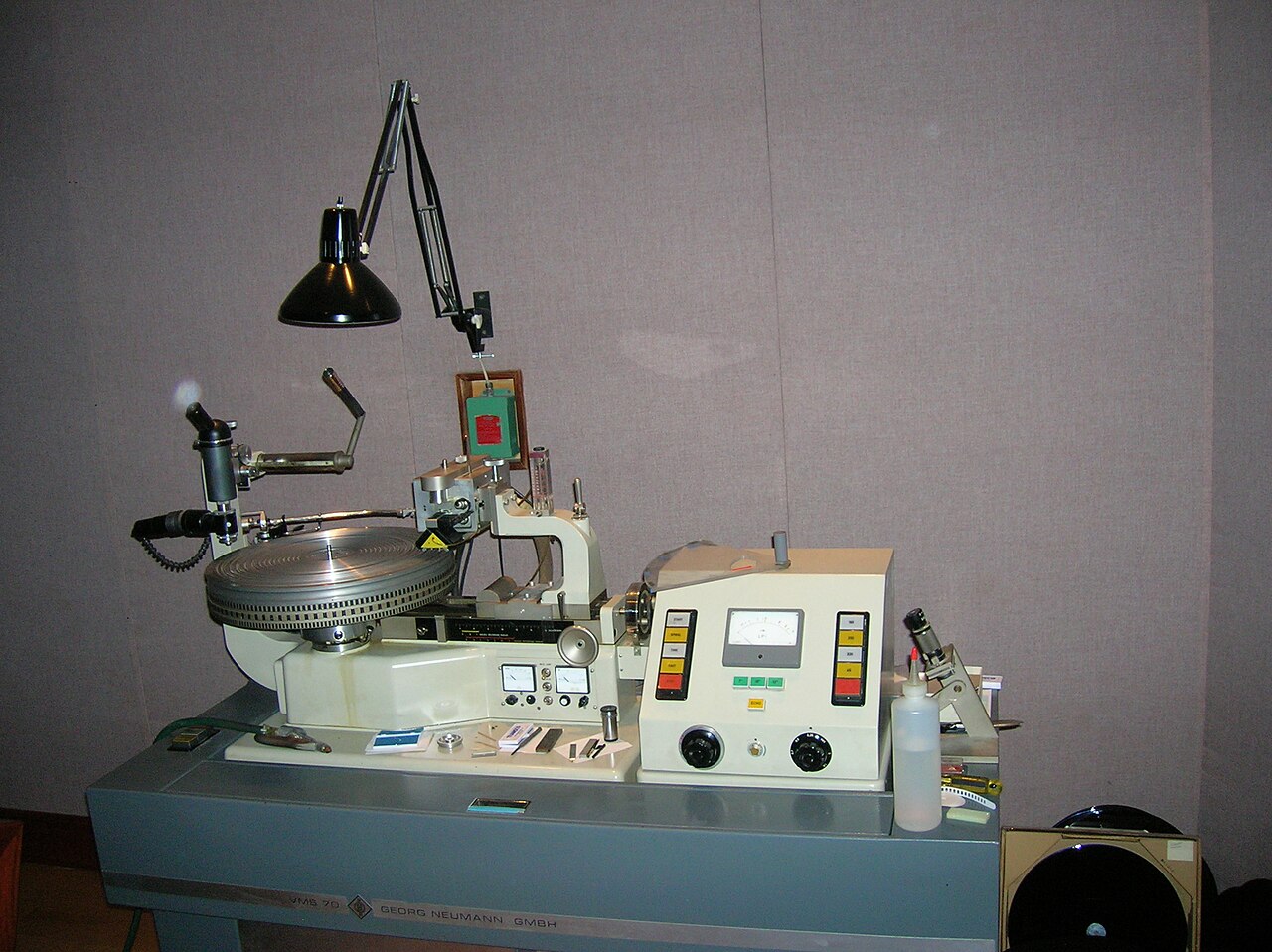
Add the inner-groove problem — the linear speed under the stylus drops as it moves inward, so high-frequency detail degrades toward the centre — and side length becomes a genuine artistic constraint. Which songs go last is a technical decision as much as a sequencing one.

The cut
Thriller was assembled with more material than survived. Faced with sides that ran too long to cut with the impact they wanted, they shortened the album — trimming and dropping until each side would fit at a level that hit properly.
Nine tracks. Roughly forty-two minutes. Sides short enough to be cut loud, with real low end, on a stereo the buyer probably kept in the living room.
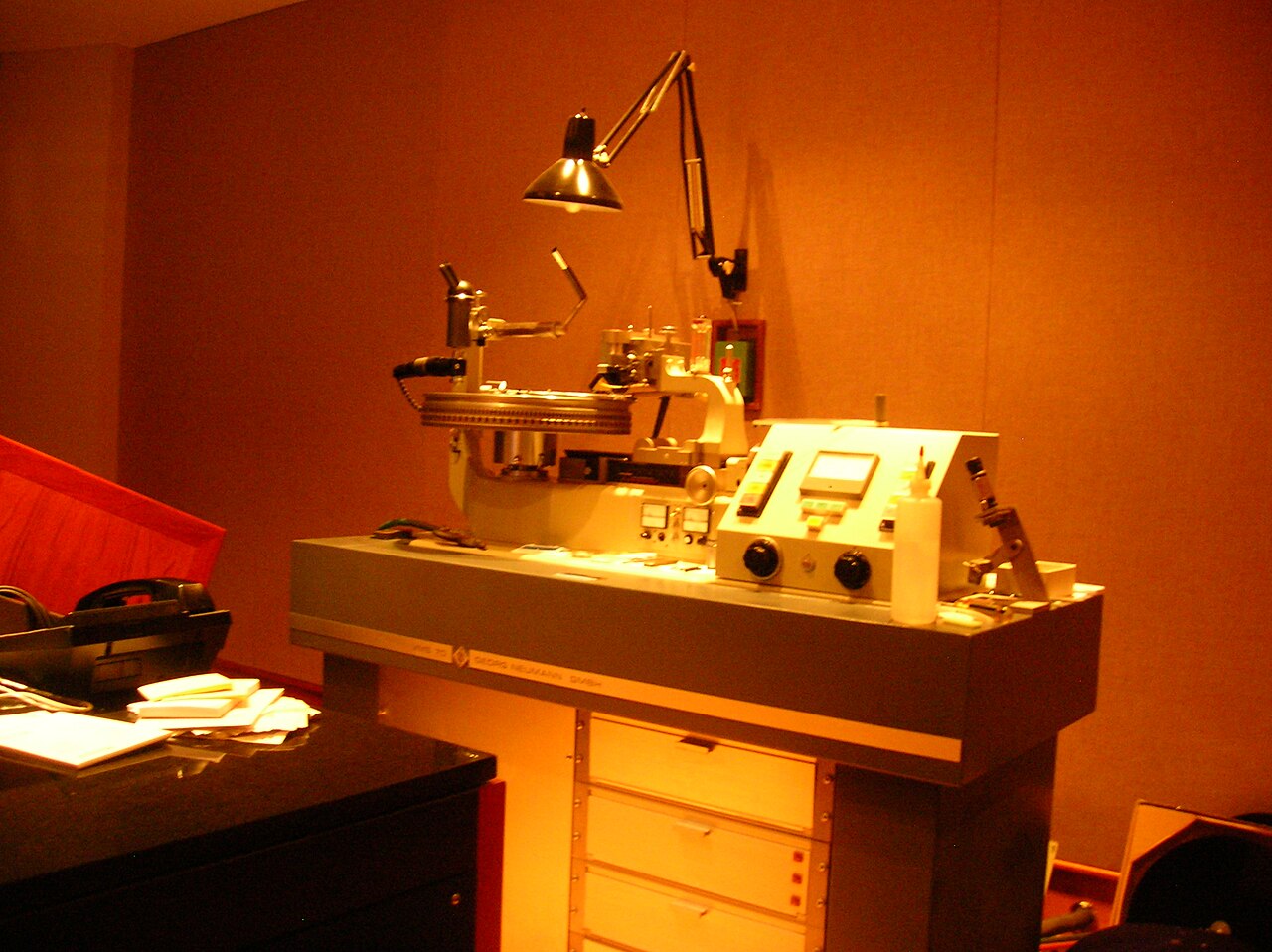
It is difficult to overstate how much this improved the record. Nine tracks with no obvious filler is a different listening experience from twelve with three weak ones — and the constraint that produced it was the width of a groove.
Made to be heard on anything
Swedien engineered and mixed it, and the mixes were checked obsessively on small, ordinary speakers — the kind people actually owned, not the large soffit-mounted monitors in the control room.
This is why Thriller works everywhere. The bass is articulated rather than merely deep, so it survives on a speaker that cannot reproduce the bottom octave. The vocal sits where a small speaker is most efficient. The percussion is bright enough to cut through a car.
That discipline is entirely transferable, and most people still skip it. A mix that only works on good monitors is not finished; it is a mix that has been flattered.
The part that has aged
Bernie Grundman mastered it, and by modern standards it is not loud. The dynamic range is generous. Transients are intact. A drum hit still hits.
Play it after a record mastered in 2005 and Thriller sounds quieter — because it is. On a streaming platform, where everything is normalised to a common target, that gap disappears entirely and Thriller simply sounds better: it arrives at the same loudness as everything else, but with its dynamics still in place.
There is a small irony there. The record was engineered around the limitations of a physical format that has been obsolete for decades, and those limitations made choices that turned out to be correct for a delivery system nobody had imagined.
What survives the format
Every constraint in this story is gone. A streaming release has no side length, no inner-groove loss, no groove width. You can release nineteen tracks running seventy minutes and nothing physical objects.
And records got worse in exactly the ways the constraint used to prevent. Modern tracklists are longer and weaker, partly because there is no cost to including a mediocre song — and on platforms that pay by stream, there is an incentive.
The useful question is not how to bring vinyl back. It is which discipline you keep once the thing enforcing it disappears:
- ·Would this record be better shorter? Nearly always yes. Nothing forces the question any more, so you have to ask it.
- ·Does it work on bad speakers? Phone speakers and cheap earbuds are the new living-room stereo, and they are less forgiving than it was.
- ·Is the loudness bought or earned? Normalisation means density no longer buys attention. It only costs dynamics.
Thriller answered all three, under duress, because a groove is a physical object. The answers outlived the object.
Try it on your own mix
Wavely shows the whole chain — every stage, every parameter, and why each decision was made. Adjusting it and re-mastering is free on every plan.
Get started free →